
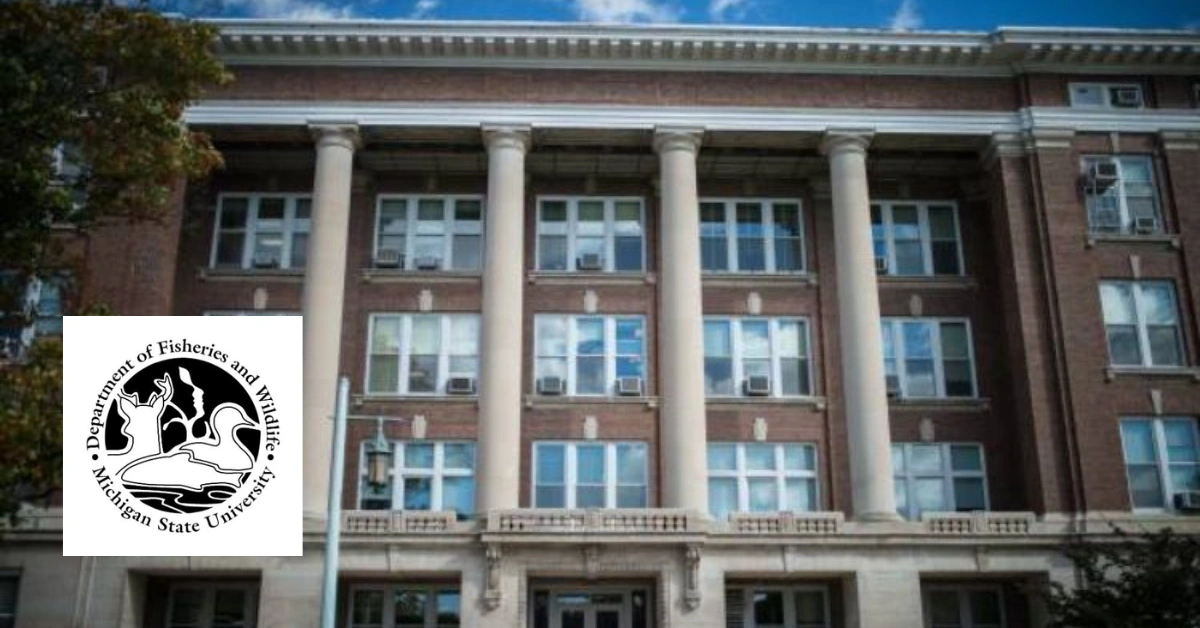
The USGS Michigan Cooperative Fish and Wildlife Research Unit is officially accepting applications for a Master of Science (MS) Research Assistantship within the Department of Fisheries and Wildlife at Michigan State University (MSU).
This fully funded graduate opportunity allows the selected student to lead a vital research project investigating waterf625900owl productivity across urban and rural landscapes in Michigan.
Scholarship Overview
| Host Country | United States |
| Institution | Michigan State University (Department of Fisheries and Wildlife) |
| Study Location | Study in United State |
| Eligible Countries | All Countries |
| Requirements | Bachelor Degree |
| Scholarship Category | Postgraduate Scholarship | Masters Scholarship |
| Reward | Fully Funded |
| Application Closing Date | 31st July, 2026 |
Benefits of Michigan State University Masters Scholarship
This assistantship offers a comprehensive financial package to completely cover your studies:
- Full Tuition Coverage.
- $30,000 Annual Living Stipend.
- Comprehensive Health Insurance.
- Professional Development Opportunities.
Related Scholarship Opportunities:
- Kansas State University Scholarship 2026
- European Union LASOMA Scholarship 2026
- US Army and Air Force ROTC Scholarships 2026
- David Oyedepo Foundation Scholarship 2026
Responsibilities
The selected MS candidate will lead field research and data analysis to help inform state-wide waterfowl management decisions. Primary duties include:
- Collaborating with the Michigan Department of Natural Resources (MDNR) to monitor waterfowl productivity on public and private lands.
- Deploying and managing remote cameras and drones for wildlife monitoring.
- Managing field technicians and collecting/processing large photographic datasets.
- Conducting vegetation assessments in focal wetland areas.
- Analyzing ecological and spatial data using R and GIS software.
Requirements and Qualifications
Applicants must meet the following minimum criteria to be considered for the assistantship:
- A Bachelor of Science (BS) degree in wildlife ecology, biology, natural resources, or a closely related field.
- Ability to drive field vehicles and work productively in remote, challenging wetland environments.
- Practical experience working with remote cameras and evaluating photo data.
- Proven capability to manage time effectively, solve field problems independently, lead a team, and communicate reliably with partner agencies.
- Prior experience organizing and analyzing large ecological datasets.
- Proficiency with statistical programming in R and spatial analyses using GIS.
- Familiarity with waterfowl identification and general avian ecology.
- Training or experience in operating drones and analyzing drone imagery (highly valued but not strictly required).
Required Documents
Before applying, ensure you compile the following documents into a single PDF file:
- Cover Letter
- CV / Resume
- Academic Transcripts
- References
How to Apply for Michigan State University Masters Scholarship 2026
The application process for this position bypasses the traditional university application portal for its initial phase. Candidates apply directly via email to the project supervisor:
- Click on the application button below to Visit the Official Portal
- Combine your Cover Letter, CV, Transcripts, and Reference List into one single PDF document.
- Compose an email with a clear, professional subject line (e.g., Application: MS Research Assistantship – Waterfowl Productivity).
- Send your single PDF attachment directly to the designated project contact:
- Contact Person: Steven Gray
- Email Address: graystev@msu.edu
- Make sure your application is emailed no later than July 31, 2026.
Scholarship Alerts: Please click the button(s) on the right bottom corner to join our Scholarship Channels for more updates