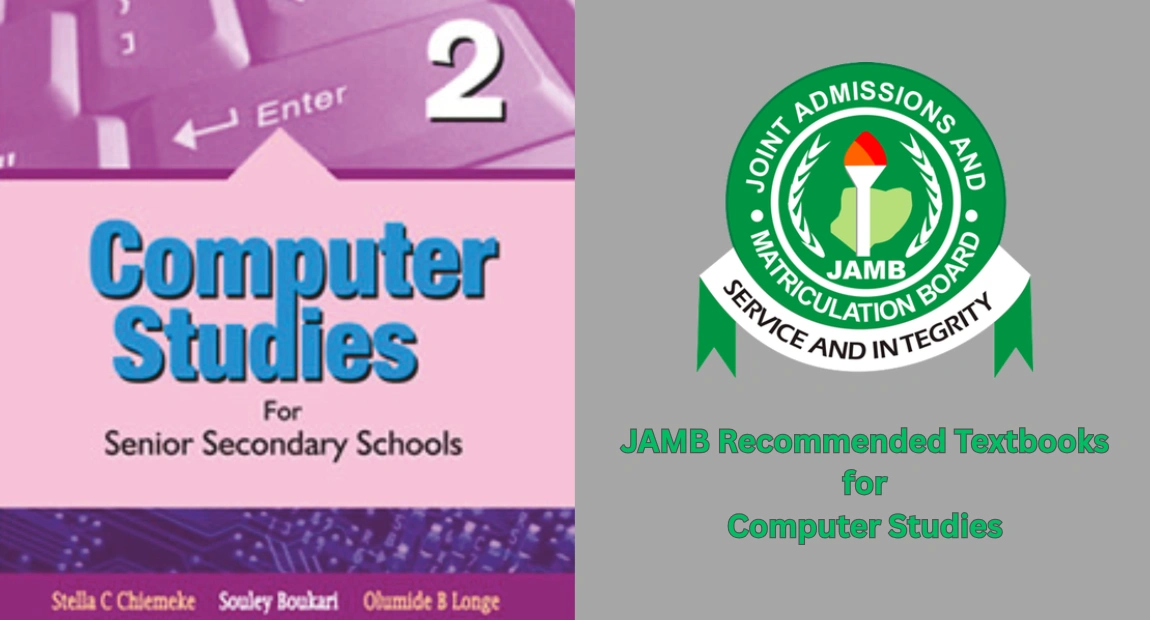
Recently, we have been receiving quite some queries concerning the JAMB recommended textbooks for Computer Studies 2026/2027, as well as if these books have been disclosed. The truth remains that the Joint Admissions and Matriculation Board has released textbooks for all UTME subjects including that of Computer Science.
Computer Studies has become one of the most relevant subjects in today’s digital age, and JAMB tests students on ICT fundamentals, computer hardware, software, data processing, the internet, networking, computer ethics, emerging technologies, and practical applications. To perform well, students must use textbooks recommended by JAMB since they cover JAMB syllabus.
In this guide, we have mention all of these books, and how they intend to help you score higher in your examination. So, take your time knowing about the best Computer Studies textbooks for UTME, ICT and Computer Studies materials for JAMB, and Senior Secondary School computer textbooks.
Recommended Textbooks for JAMB UTME Computer Studies 2026/2027
| S/N | BOOK TITLE | AUTHOR | DESCRIPTION |
|---|---|---|---|
| 1 | A Textbook for Year 11 – Computer Studies | Bibhya Sharma, Shaveen Singh & Vijay Singh | A modern secondary-school computer studies text from the Fiji Ministry of Education. Covers ICT foundations, computer architecture, data handling, software, programming basics, and internet safety. |
| 2 | My Computer for Senior Secondary Schools 1–3 | Addan Emmanuel (2013) | A practical-oriented Nigerian computer studies textbook. Includes diagrams, exercises, and a practical training CD. Helps students understand hardware parts, software operations, file management, and basic troubleshooting. |
| 3 | Fundamentals of Computer Studies | Adebisi, A. J. (2013) | Provides foundational knowledge in ICT, hardware, software, data processing, computer ethics, and emerging technologies. Useful for building core understanding before tackling advanced concepts. |
| 4 | Online with Computer Senior Secondary 2 | Adedapo F. O., Mitchell A. S., Agunbiade D. A. | A digital-based learning text that focuses on ICT literacy, computer applications, and modern computing tools. Supports online-based learning and explains key computer concepts clearly. |
| 5 | Computer Science: An Overview | Brookshear, J. G. (1991) | A globally respected introductory computer science text. Covers algorithms, hardware, programming languages, operating systems, databases, artificial intelligence, and computer theory. |
| 6 | Computer Studies for Senior Secondary Schools | Chiemeke Stella C., Souley Boukari, Olumide B. Longe | A comprehensive Nigerian senior school text aligned with WAEC, NECO, and JAMB syllables. Covers data processing, ICT tools, programming basics, networks, spreadsheets, word processing, and more. |
| 7 | Computer Studies for You (2nd Edition) | Doyle, S. (1995) | A clear and student-friendly text widely used in secondary schools. Covers computer operations, ICT applications, coding basics, data handling, and internet tools. |
| 8 | Computer Studies and Information Technology (The Motivate Series) | Driscoll, T. & Dolden, R. (1998) | A Macmillan educational text combining theory and practical ICT applications. Covers systems, data, computer architecture, and IT tools. |
| 9 | Modern Introductory Computer Science | Henderson, P. (1987) | Provides foundational explanations of computing principles including file systems, algorithms, programming concepts, and hardware. Helpful for understanding deeper computer science theory. |
| 10 | Computer Studies for Senior Secondary Education | HiiT@School | A modern Nigerian ICT coursebook with hands-on exercises, practical assessments, and computer lab guidance. Good for CBT-style practical questions. |
| 11 | Senior Secondary School Certificate Examination on Data Processing (2014–2020) | Ojo D. J. (2018) | Past questions and answers for Data Processing theory, objective, and practical exams. Helps students practise real examination patterns and improve speed. |
| 12 | New Computer Studies 1–3 | Otuka J. O., Akande A. F., Iginla S. I. (2019) | A current WAEC/NECO/JAMB-aligned computer studies text. Covers SSS1–SSS3 curriculum including ICT, data, emerging technologies, and computer operations. |
| 13 | SSCE/NECO Past Questions and Answers on Computer Studies | Offers real examination questions for objective and theory practice. Improves exam readiness and familiarises students with commonly repeated question types. | |
| 14 | CS 0.5: A Better Approach to Introductory Computer Science | Sloan, R. H., & Troy, P. (2008) | A simplified conceptual introduction to computer science, ideal for students needing easy explanations of algorithms, problem-solving, and programming thinking. |
| 15 | CS 0.5: Introductory Computer Science for Majors | Sloan, R. H., & Troy, P. (2008) | A deeper level of introductory computing targeted at serious learners. Introduces core computing theory, computation, programming logic, and algorithms useful for advanced understanding. |
Amongst these books include data processing textbooks for JAMB candidates, computer science study guide for Nigerian students, WAEC/NECO/JAMB computer studies books, and ICT textbooks for secondary school learners, so take your time selecting the ones that suit your study style.
Recommended Post:
- Recommended Textbooks for all JAMB Subjects 2026/2027
- JAMB Recommended Textbooks for Geography 2026/2027
- JAMB Recommended Textbooks for Government 2026/2027
- JAMB Recommended Textbooks for Home Economics 2026/2027
How to Study Computer Studies for JAMB Using These Textbooks
1. Understand the basics thoroughly: Topics like hardware, software, data types, input/output devices, and computer systems form the foundation.
2. Practise Data Processing questions: These come up frequently and include spreadsheets, databases, file management, and charts.
3. Develop ICT literacy: Students must understand internet tools, networking terms, storage devices, and modern communication technologies.
4. Study practical computer operations: Word processing, spreadsheets, presentation software, and basic troubleshooting often appear in UTME questions.
5. Use past questions regularly: Computer Studies questions follow predictable patterns, and past questions reveal these trends.
6. Use practical-oriented textbooks: Books like My Computer SSS 1–3 and HiiT@School guide students through hands-on ICT knowledge.
Frequently Asked Questions (FAQs)
Ques: Which textbook is best overall for JAMB Computer Studies?
Ans: Computer Studies for Senior Secondary Schools by Chiemeke et al. is highly comprehensive and aligned with the syllabus.
Ques: Do I need to study advanced computer science books like Brookshear?
Ans: Not required, but they deepen understanding for students who want stronger computing foundations.
Ques: Are past questions important for Computer Studies?
Ans: Yes. Many JAMB questions are similar to WAEC/NECO patterns.
Ques: Is Data Processing part of JAMB Computer Studies?
Ans: Yes. JAMB includes data types, DBMS concepts, spreadsheets, charts, and data handling.
Ques: Do I need practical computer experience?
Ans: Not mandatory, but it helps with understanding ICT tools and applications.
Ques: Which textbook is best for beginners?
Ans: Adebisi’s Fundamentals of Computer Studies and Addan Emmanuel’s My Computer series are excellent for foundational learning.
Ques: Is programming tested in JAMB Computer Studies?
Ans: Only basic concepts such as algorithms, flowcharts, and problem-solving, not actual coding.
Ques: Do I need to study computer ethics and security?
Ans: Yes. Topics like cybercrime, data security, and ethical use of ICT often appear.
Ques: Are internet-based questions common?
Ans: Very. Students must understand browsing, search engines, email, and online safety.
Ques: Are these books useful for WAEC and NECO as well?
Ans: Yes. All recommended textbooks serve WAEC, NECO, and UTME candidates.