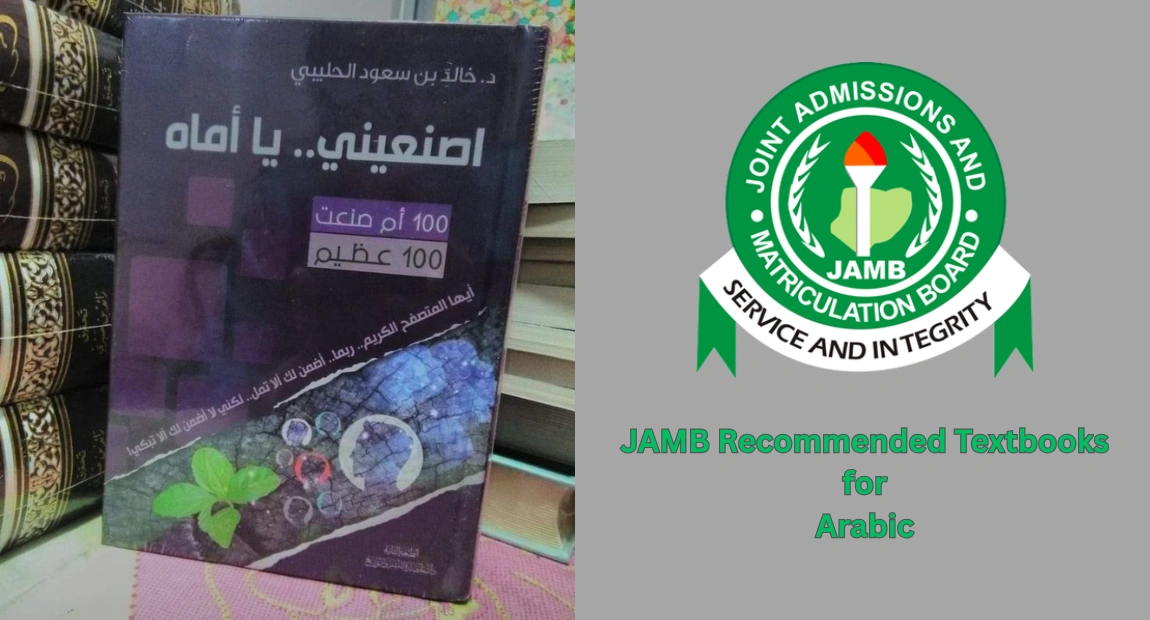
The JAMB Arabic exam tests a student’s ability in Comprehension, Composition, Translation, Grammar, and Literature. These areas require good language skills, an understanding of classical and modern Arabic structure, and familiarity with recommended literary works.
To help students prepare effectively, JAMB recommended textbooks for Arabic 2026/2027 which covers the required syllabus are provided by the examination board. These UTME Arabic study materials and Arabic literature for WAEC, NECO and JAMB increases reading ability, grammar application, vocabulary development, composition writing, and literary appreciation.
So, if you are interested, this guide provides the best Arabic textbooks for UTME, Arabic grammar books for JAMB, recommended Arabic books for Nigerian students, and Arabic comprehension and translation textbooks.
Recommended Textbooks for JAMB UTME Arabic 2026/2027
1. Comprehension, Composition and Translation
| S/N | BOOK TITLE | AUTHOR | DESCRIPTION |
|---|---|---|---|
| 1 | المطالعة الواضحة | بشير أحمد محيي الدين و المرضي مختار المرضي | A widely used Arabic reading text that builds comprehension skills through graded passages, vocabulary, and exercises. Helps students interpret, summarise, and analyse Arabic texts. |
| 2 | الإنشاء العربى المتوسط (للمدارس الثانوية) | سيد حمرة مالك (2005) | A strong resource for composition writing. Covers sentence structure, essay formats, letter writing, and guided composition for secondary students. Very useful for JAMB essay-style questions. |
| 3 | القراءة الرشيدة، الجزء 1–4 | عبد الفتاح صبرى و علي عمر بك | A four-part reading series focusing on comprehension, analysis, and language development. It improves students’ ability to understand classical and modern Arabic texts. |
| 4 | سمير التلاميذ، الجزء 1–2 | عبد الله الطيب | Designed to build foundational comprehension skills with simple stories, reading passages, and exercises. Suitable for students strengthening reading fluency. |
| 5 | كيف تكتب الإنشاء | غرب ط. زاريا (1999) | A practical handbook on composition writing. Helps students craft clear, structured essays and paragraphs, an essential skill for UTME Arabic. |
| 6 | العربية الميسرة الجديدة للمرحلة الثانوية | محمد الأول أبوبكر و الآخرون | A modern secondary-school Arabic course covering reading, grammar, vocabulary, and comprehension in a simplified format. Ideal for revision. |
| 7 | العربية الجديدة في نيجيريا (الكتب 1–3) | محمد بديع شريف و سليم حكيم و الحاج حسين آدمو | A structured Arabic course adapted to Nigerian learners. Strengthens comprehension, reading, vocabulary, and translation. |
| 8 | Learning Arabic Language | Adekilekun, A. L. A. | A beginner-friendly guide ideal for students developing or revising foundational language skills. |
| 9 | A Modern Arabic Course Book 1 | Balogun, I. A. B. & Oseni Z. I. (1982) | A structured Arabic learning course with comprehension passages, exercises, and vocabulary. Useful for beginners and intermediate learners. |
| 10 | A New Arabic Grammar of the Written Language | Haywood, J. A. & Nahmad, H. M. (1965) | A globally respected grammar and comprehension text. Also contains translation exercises and examples drawn from classical Arabic. |
| 11 | A Guide to Arabic Composition (Books I & II) | Malik, S. H. A. (1982) | A composition-focused book that teaches sentence building, paragraphing, and essay development. Very beneficial for UTME Composition. |
| 12 | Arabic newspapers, magazines, journals | — | Used to develop real-life comprehension and translation skills through exposure to modern Standard Arabic. |
2. Grammar (النحو)
| S/N | BOOK TITLE | AUTHOR | DESCRIPTION |
|---|---|---|---|
| 1 | النحو الواضح (الجزء 1–3) | على الجارم و مصطفى أمين | The most widely studied Arabic grammar text in Nigeria. Clear explanations, examples, and exercises strengthen students’ understanding of sentence structure, inflection, and syntax. |
| 2 | متن الأجرومية | محمد أجروم الصنهاجى | A classical grammar text foundational for Arabic syntax. Helps students understand the rules behind sentence construction. |
| 3 | التحفة السنية بشرح المقدمة الأجرومية | محمد محيي الدين عبد الحميد | A detailed commentary on الأجرومية. Useful for students needing deeper grammar understanding for UTME. |
| 4 | A New Arabic Grammar of the Written Language | Haywood & Nahmad | Serves both grammar and comprehension needs. Excellent for students preparing for advanced grammar questions. |
3. Arabic Literature (الأدب العربي)
| S/N | BOOK TITLE | AUTHOR | DESCRIPTION |
|---|---|---|---|
| 1 | المأدبة الأدبية للطلاب العربية في إفريقيا | زكريا حسين (2004) | A NECO/WAEC-approved text focusing on literary appreciation, poetry, and prose. Very useful for understanding Arabic literary expression. |
| 2 | الطبقة العليا | زكريا حسين (2006) | A continuation of the author’s literary series. Covers stories, language style, and cultural themes. |
| 3 | العبرات | مصطفى لطفي المنفلوطي (2004) | A classic Arabic literary work containing emotional prose, moral lessons, and stylistic excellence. Frequently used in WAEC, NECO, and UTME literature study. |
| 4 | ادفع بالتي هي أحسن | جميل عبد الله الكنوي (2013) | A modern literary text focusing on themes of ethics, society, and good conduct. Useful for literary analysis questions. |
| 5 | المفصل في تاريخ الأدب العربي | أحمد الاسكندري والآخرون | A comprehensive Arabic literature history text. Covers major literary periods, movements, authors, and styles. Essential for students preparing for theory-based literature questions. |
Recommended Posts:
- Recommended Textbooks for all JAMB Subjects 2026/2027
- JAMB Recommended Textbooks for Christian Religious Studies 2026/2027
- JAMB Recommended Textbooks for Economics 2026/2027
- JAMB Recommended Textbooks for Computer Studies 2026/2027
Transliteration of Some Arabic Literature Titles
- Zakariyau I. Oseni: Al-Ma’dubat Al-Adabiyyah
- Zakariyau I. Oseni: Al-Tabaqatul-Ulya (The Upper Class)
- Mustapha Lutfi Al-Manfaluti: Al-Abarat
- Jamil Abdullahi Alkanawi: Idfa’a Bil-Lati Hiya Ahsan
- Ahmad Al-Askandari wal Akharun: Al-Mufassal fi Tarikh al-Adab al-Arabi
How to Study Arabic for JAMB Using These Textbooks
1. Master the grammar first: Grammar forms the foundation of comprehension, translation, and composition.
2. Practice reading Arabic daily: Use newspapers, magazines, and passages from recommended books.
3. Write short essays and compositions: This develops fluency and confidence in structured expression.
4. Study literary works with attention to themes and style: JAMB tests understanding of meaning, message, and literary devices.
5. Regularly revise vocabulary: A strong vocabulary makes comprehension and translation much easier.
6. Practise past questions consistently: This reveals patterns in JAMB’s questioning style.
Frequently Asked Questions (FAQs)
Ques: Are classical Arabic texts necessary for JAMB?
Ans: Yes. JAMB includes questions from both classical and modern Arabic, especially in grammar and literature.
Ques: Which book is best for grammar?
Ans: An-Nahwu al-Wadhih (النحو الواضح) is the most effective for secondary-level grammar.
Ques: How do I prepare for Arabic comprehension?
Ans: Read regularly, summarise passages, and practise vocabulary. Books like القراءة الرشيدة are very helpful.
Ques: Is Arabic Literature heavily tested in JAMB?
Ans: Yes. Literature forms a significant part of the syllabus, especially prose, poetry, and cultural texts.
Ques: Can a beginner use these books?
Ans: Some, like Learning Arabic Language and Arabiyyah Muyassarah, are beginner-friendly, while others are more advanced.
Ques: Should I study both classical and modern Arabic?
Ans: Absolutely. JAMB questions may include passages from either form.
Ques: Is Haywood & Nahmad’s book necessary?
Ans: It is highly useful for serious students who want deeper mastery of grammar.
Ques: Do I need to memorise literary titles and authors?
Ans: Yes, especially for the literature component.
Ques: Are translation skills important?
Ans: Very important, translation is a core part of the UTME Arabic exam.
Ques: How many hours per week should I study Arabic?
Ans: Three to five sessions per week is adequate if you study consistently.