Geography in JAMB combines physical geography, human geography, regional geography, map reading, and environmental studies. Candidates are tested on landforms, climate, vegetation, population, settlement, economic activities, map interpretation, and regional characteristics of Nigeria, West Africa, Africa, and the world.
To succeed, students need textbooks that explain concepts clearly, use diagrams and maps effectively, and align with the senior secondary curriculum. Below is a detailed guide to the JAMB recommended textbooks Geography for 2026/2027 and how each supports UTME preparation.
Recommended Textbooks for JAMB UTME Geography 2026/2027
For the JAMB recommended textbooks for Geography 2026/2027, we have here best Geography textbooks for UTME, physical and human geography books for JAMB, geography map reading textbooks, senior secondary school Geography textbooks, WAEC NECO JAMB, Geography study materials, regional geography books for Nigerian students, and Geography syllabus recommended books below:
| S/N | BOOK TITLE | AUTHOR | DESCRIPTION |
|---|---|---|---|
| 1 | Certificate Physical and Human Geography for Senior Secondary Schools (West African Edition) | Adeleke, B. O.; Areola, O.; Leong, G. C. (2002) | A comprehensive senior secondary text covering physical geography (rocks, climate, landforms), human geography (population, settlement), and regional studies. Strongly aligned with WAEC, NECO, and JAMB syllabi. |
| 2 | Contemporary World Regional Geography | Bradshaw, M. et al. (2004) | Examines global regions with emphasis on physical environment, population, economy, and development. Useful for understanding world regional geography questions. |
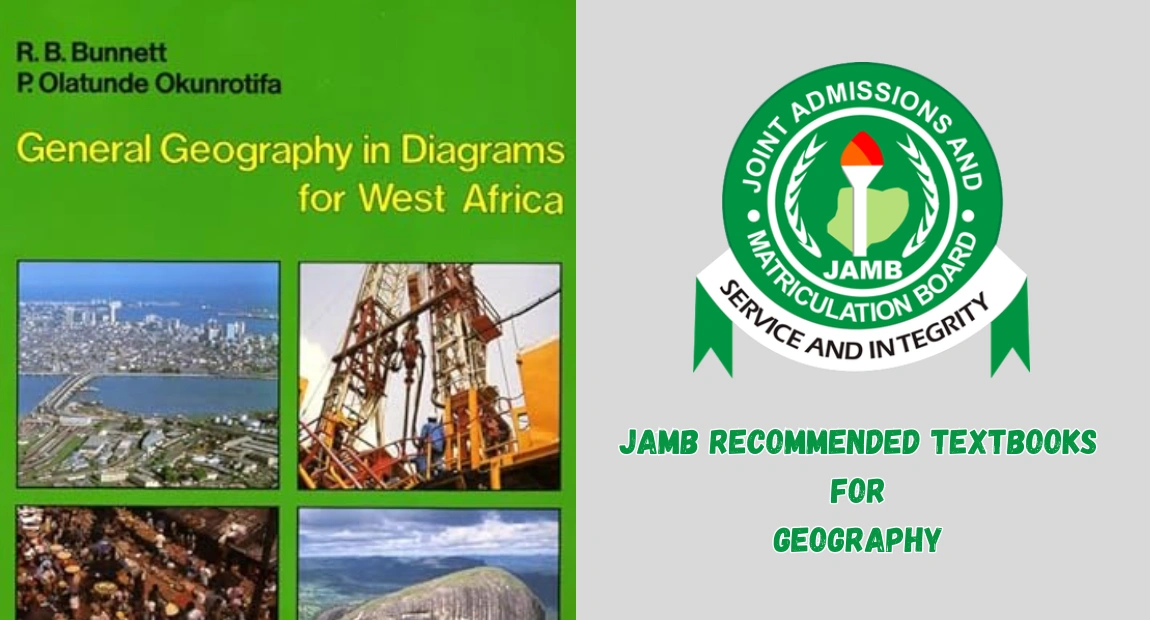
| 3 | General Geography in Diagrams for West Africa | Bunnett, R. B. & Okunrotifa, P. O. (1999) | Uses diagrams and illustrations to explain physical and human geography concepts. Excellent for visual learners and map-based understanding. |
| 4 | Collins New Secondary Atlas | Macmillan | An essential atlas for map reading, location identification, climate maps, population distribution, and regional analysis. Indispensable for JAMB map questions. |
| 5 | Introduction to Geography (7th Edition) | Fellman, D. et al. (2005) | Provides a broad introduction to physical, human, and environmental geography. Helps students understand geographical processes and interactions. |
| 6 | Introduction to Geography (9th Edition) | Getis, A. et al. (2004) | A detailed and well-illustrated text covering global geography concepts, environmental systems, population, and economic activities. |
| 7 | A New Geography of West Africa | Iloeje, N. P. (1999) | A classic regional geography text focusing on West Africa’s physical features, climate, vegetation, population, and economic activities. |
| 8 | A New Geography of Nigeria (New Edition) | Iloeje, N. P. (1982) | One of the most authoritative books on Nigeria’s geography. Covers relief, climate, vegetation, population, transport, and economic development. |
| 9 | Map Reading of West Africa | Nimako, D. A. (2000) | Focuses specifically on map interpretation skills such as scale, bearings, symbols, contours, and distance measurement, main areas in JAMB Geography. |
| 10 | A Regional Geography of Africa (New Edition) | Okunrotifa, P. O. & Michael, S. (2000) | Covers Africa’s physical regions, population patterns, natural resources, and economic activities. Useful for continental geography questions. |
| 11 | Geographical Regions of Nigeria | Udo, R. K. (1970) | Explains Nigeria’s regional divisions, physical features, and socio-economic activities. Supports understanding of regional geography topics. |
| 12 | Geography: An Integrated Approach (2nd Edition) | Waugh, D. (1995) | Integrates physical, human, and environmental geography with real-world examples. Encourages analytical thinking for objective questions. |
| 13 | A Comprehensive Text on Physical, Human and Regional Geography | Adegoke, M. A. (2013) | A modern all-in-one Geography textbook covering the full senior secondary syllabus. Very useful for structured, end-to-end UTME preparation. |
Recommended Post:
- Recommended Textbooks for all JAMB Subjects 2026/2027
- JAMB Recommended Textbooks for Government 2026/2027
- JAMB Recommended Textbooks for Home Economics 2026/2027
- JAMB Recommended Textbooks for Hausa 2026/2027
How to Study Geography for JAMB Using These Textbooks
1. Separate physical and human geography: Study landforms, climate, and vegetation separately from population, settlement, and economic activities.
2. Practise map reading regularly: Map interpretation questions are frequent and require consistent practice.
3. Use diagrams and sketches: Many Geography questions are easier when visualised.
4. Study Nigeria and West Africa carefully: These areas receive significant attention in JAMB questions.
5. Use an atlas alongside textbooks: Always locate places, regions, rivers, mountains, and climatic zones on maps.
6. Practise past questions: Repeated exposure helps you recognise common patterns.
Frequently Asked Questions (FAQs)
Ques: Which Geography textbook is best for beginners?
Ans: Certificate Physical and Human Geography by Adeleke, Areola, and Leong is ideal.
Ques: Is an atlas compulsory for JAMB Geography?
Ans: Yes. An atlas is essential for map-related questions.
Ques: Which book is best for map reading?
Ans: Map Reading of West Africa by Nimako is highly recommended.
Ques: Are Nigerian geography topics important?
Ans: Yes. Nigeria-based questions appear frequently.
Ques: Do I need international textbooks like Getis or Fellman?
Ans: Not compulsory, but they deepen understanding of global geography.
Ques: How important are diagrams in Geography?
Ans: Very important. Many questions test diagram interpretation.
Ques: Can I rely on one textbook only?
Ans: It’s better to combine a core textbook with an atlas and a map-reading guide.
Ques: How many hours weekly should I study Geography?
Ans: Two to four focused sessions per week are ideal.
Ques: Are these books useful for WAEC and NECO?
Ans: Yes. They align fully with SSCE syllabi.
Ques: Is physical geography more important than human geography?
Ans: Both are equally important in JAMB.